What to Teach
What to teach…
What's Popular
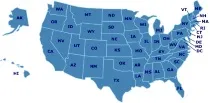
Homeschooling Is Growing Rapidly in Many States of the United States
Includes statistics from around the country detailing the number of homeschooled students. Also discusses the growth of homeschooling around the world.
For Such a Time as This
For Such a Time as This offers curriculum assistance, distance learning, and college admission consulting.
Amanda Bennett's Unit Studies
Available for purchase, Amanda's topical unit studies offer weekly learning objectives and much more. The daily lesson plans and assignments are included in the book, ready for immediate use. These unit study guides include daily lesson plans, with reading and writing assignments, spelling and vocabulary words, biography and geography studies, projects, reading lists, and Internet sites of interest. Designed for use by all ages, each day's lesson plan is divided into lower and upper levels. For younger children, use only the parts of the plan that fit the needs of your child, and apply the same principle for older students.
FM Secular Homeschoolers
This is a secular homeschool support group for the families of the Fargo/Moorhead areas. The group is intended to offer a forum for sharing ideas and meeting new people.
Marketing to Homeschoolers with Podcasts
With podcasts you have a chance to reach a new component of the homeschool audience that you might not reach via newsletters, blog posts, or social media. This video details three advantages to marketing through podcasts.
Easter Egg Matching Activity
This matching activity for younger kids can be made out of plastic Easter eggs.
Homeschool from the Other Side
Enjoy this essay by a homeschool grad, Maggie Tynan, as she recounts her experiences being a homeschooled teen. There are many ways in which you can do this, and it will be different for every family. There is no one “right” way to homeschool. It depends on the mom, the child, the situation, the subject and a multitude of other things.
Center for Sports Poetry Contest
The mission of the Center for Sports Poetry is to encourage young people throughout the United States to engage their creative spirit by writing poetry, using sport as their motif. In the tradition of honoring academic excellence, the Center will name elementary and middle school students to the Sports Poetry Honor Roll. High school and college students will be named All-American Sports Poets.
Evidence for Homeschooling: Constitutional Analysis in Light of Social Science Research
Homeschooling is a time-honored and widespread practice. It often presents, however, a conflict between the constitutional right of parents to direct the education of their children and the State’s right to impose regulations in the interest of ensuring an educated citizenry. The U.S. Supreme Court has made it clear that any regulation impacting this constitutional right must be “reasonable.” Courts have therefore generally resolved homeschooling cases by examining whether State regulation of homeschooling places an unreasonable burden on the rights of parents. The courts, however, have altogether failed to address another, more fundamental question: whether the State regulation, in fact, advances the State interest. A regulation that fails this criterion cannot be “reasonable.” Using a recent California appellate court case that initially upheld a regulation prohibiting parents from homeschooling their children unless they first obtained a state teaching credential, we show how recent social science research should impact the analysis. Instead of assuming away the issue of whether the regulation advances the State interest, we show that empirical research will allow courts to be able to answer this threshold question.1
4 My Kids Records
4 My Kids Records is committed to producing quality educational and entertainment products that will ignite a child’s excitement to learn. Every catchy song, dance-floor groove, memorable story, colorful illustration and fun-filled animation is created with a timeless heart.